Cancer Interception Research at the Basser Center

In 2022, Basser Center co-founders Mindy and Jon Gray announced a $55 million gift to launch the new Basser Cancer Interception Institute (BCII). This Institute aims to dramatically disrupt the timeline of cancer treatment, intercepting cells as they begin to develop into very early cancers, and halt or reverse that process. Basser Executive Director Susan Domchek, MD and her colleagues are launching many initiatives for the new Institute, such as leading a study testing a cancer vaccine in men and women with BRCA1 and BRCA2 mutations.
What is cancer interception?

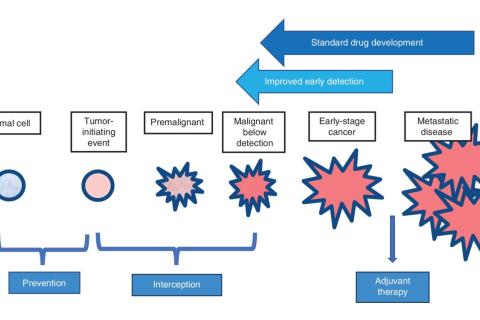
Cancer interception is an emerging approach to cancer prevention that focuses on identifying and intervening during the earliest stages of cancer development. By removing these early cells before they have a chance to grow, it may be possible to stop cancer from ever developing. Researchers are studying ways to detect, eliminate, and prevent the progression of these early abnormal cells.
At the Basser Center for BRCA, cancer interception research focuses on understanding how BRCA1 and BRCA2 mutations contribute to cancer development and identifying new strategies that could prevent or intercept BRCA-related cancers. The ultimate goal of the BCII is to discover as many potential methods and interventions to intercept these cells as possible.
Cancer Prevention Vaccine Research
Dr. Domchek spearheaded the BCII-funded study aimed to intercept cancer by pushing the immune system toward recognizing and destroying early abnormal cells before they grow into full-fledged cancer. This strategy involved using DNA medicine, developed with Philadelphia biotech company Inovio Pharmaceuticals, to train the immune system, specifically T cells, to recognize an enzyme called telomerase that’s involved in about 95 percent of human cancers. Read about the Basser cancer prevention vaccine clinical trial.
Basser Cancer Interception Institute Research Projects
The Basser Cancer Interception Institute funds many research studies related to cancer interception across Penn Medicine and external organizations. The following selection of research initiatives illustrates the breadth and promise of our work—with many other projects advancing behind the scenes.

Internal Grants
BCII-funded research projects are exploring new approaches to cancer prevention, early detection, and interception across BRCA-related cancers.
External Grants
Research is supported by the BCII through grants to external investigators studying innovative approaches to understanding, detecting, and preventing BRCA-related cancers.
Latest Cancer Interception Research & News




Frequently Asked Questions About Cancer Interception
What is cancer interception?
Cancer interception is an emerging approach to cancer research focused on identifying and intervening at the earliest stages of cancer development, before abnormal cells progress into invasive cancer.
How is cancer interception different from cancer prevention?
- Cancer prevention focuses on reducing the risk of cancer developing, while cancer interception focuses on identifying and targeting abnormal cells during the earliest stages of cancer development.
Why is cancer interception important for individuals with BRCA1 or BRCA2 mutations?
- BRCA1 and BRCA2 mutations increase the risk of several cancers. Studying how BRCA-related cancers begin may help researchers identify new ways to prevent or intercept cancer before it progresses.
How is the Basser Cancer Interception Institute (BCII) studying cancer interception?
- The BCII is studying cancer interception through research into early detection, personalized risk assessment, cancer prevention vaccines, immune-based approaches, and the biology of BRCA-related cancers.
Is cancer interception currently available as a treatment?
- Cancer interception is an emerging area of research and is not currently an established cancer treatment. Basser-supported researchers are studying potential approaches through clinical trials and other research.
What types of cancers are being studied through the Basser Cancer Interception Institute (BCII)?
- The BCII supports research focused on breast, ovarian, prostate, and gastric cancers, along with broader research into BRCA-related cancer development, early detection, and personalized risk assessment.